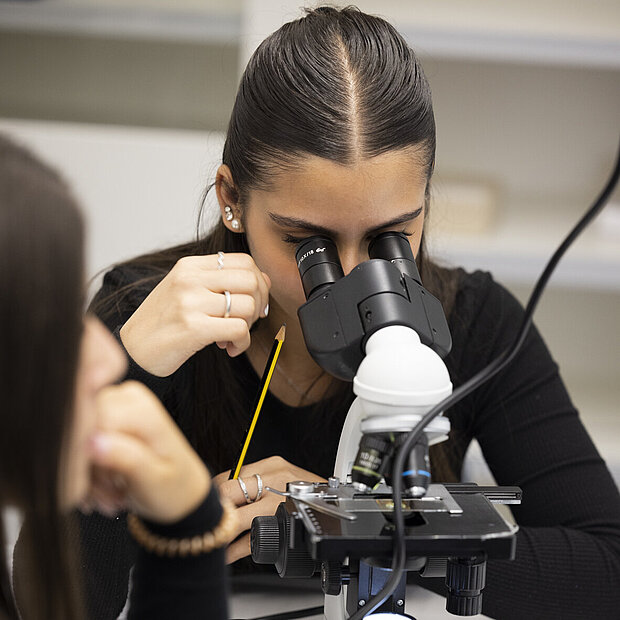
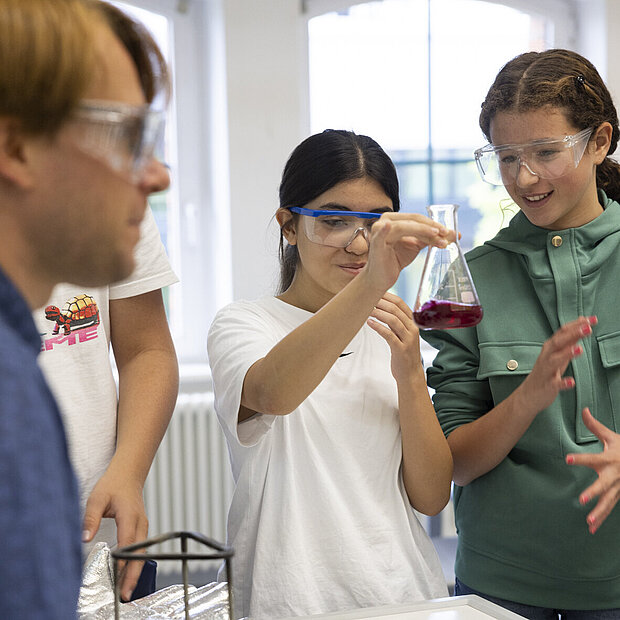
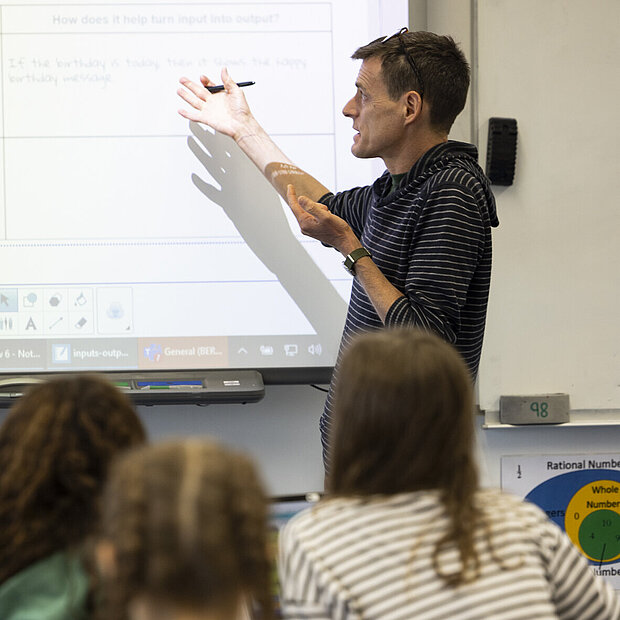
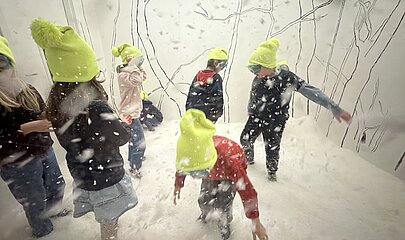
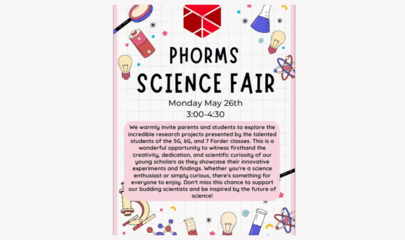
With our STEM focus, we foster our students’ enthusiasm for Mathematics, Computer Science, Science, and Technology in a variety of ways. In our modern Science Labs we combine theoretical knowledge with hands-on exploration and research. Whether through experiments, robotics, Science Fairs, Roller Coaster Week, or project-based learning, our students develop creative solutions, strengthen their problem-solving skills, and acquire important skills for the future. In this way, we create a learning environment that sparks curiosity, promotes innovation, and prepares students in the best possible way for the challenges of a digital world.
The importance of STEM (Science, Technology, Engineering and Mathematics) in education has increased significantly in recent years. We offer our secondary school students a sound STEM education and try to prepare them optimally for the demands of the modern world. This is why our school has a focus on STEM alongside bilingualism. For example, lessons in STEM subjects are taught in English from Grade 5 onwards.
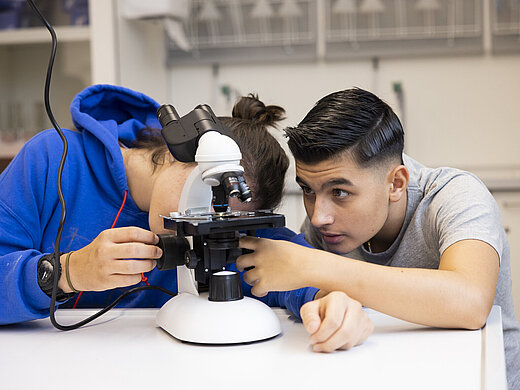
Students in our STEM-focussed grundständiges Gymnasium classes enjoy six lessons of Science per week. From Grade 9 onwards, our Science lessons for all students also increase from four to six hours per week, including all three natural sciences - Biology, Chemistry and Physics.
In upper secondary school, students can take basic courses in Biology, Chemistry, Physics and Mathematics and advanced courses in Biology and Mathematics for Abitur.
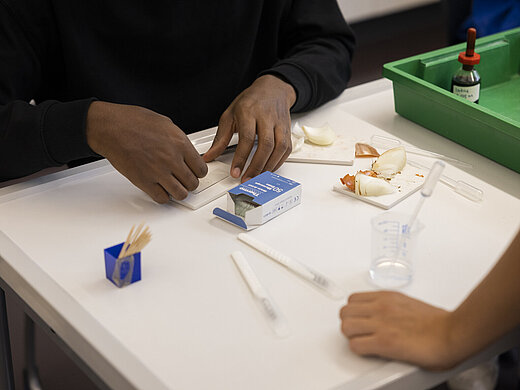
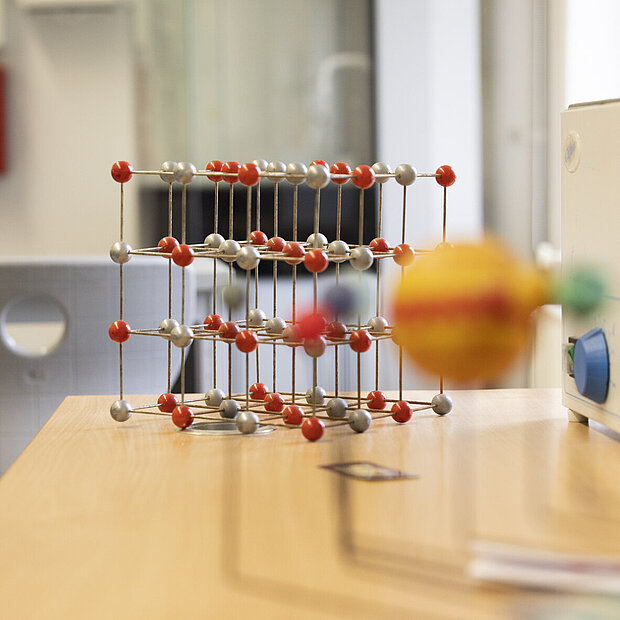
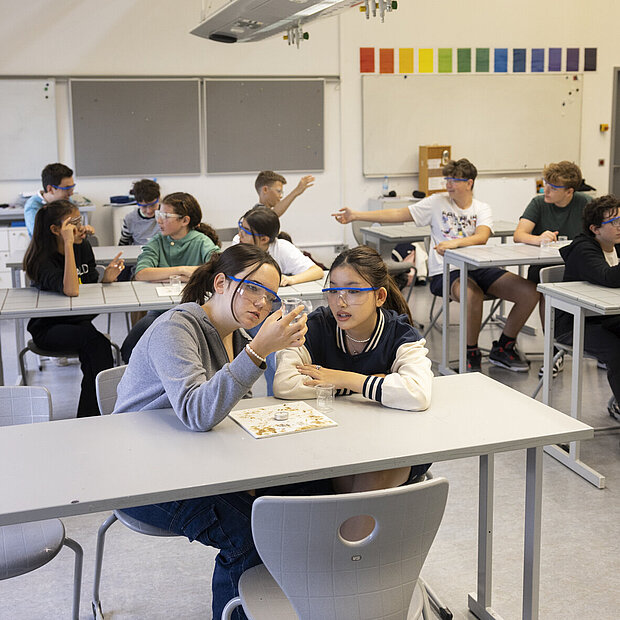
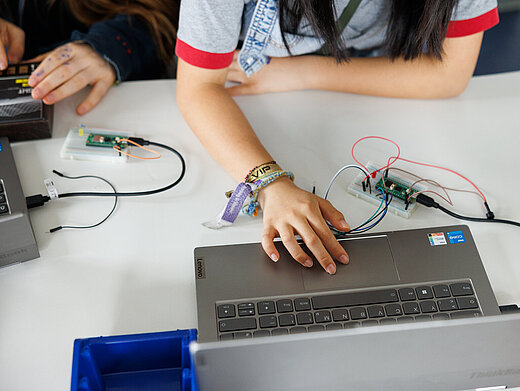
Our secondary school has modern specialist rooms for all science subjects. In the Science Labs, students can develop freely, experiment and develop their own ideas. Topics such as robotics and coding can also be explored and expand the traditional learning program.
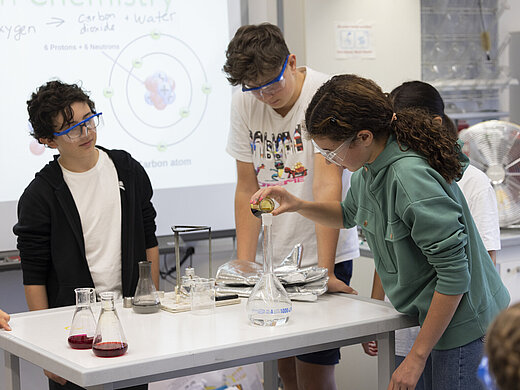
Students with a particular interest in Science have the opportunity to take part in a variety of extra-curricular activities such as coding and robotics clubs. There is also to opportunity to design experiments to compete in the annual Science Fair, Mission to Mars project, and Roller Coaster Week.
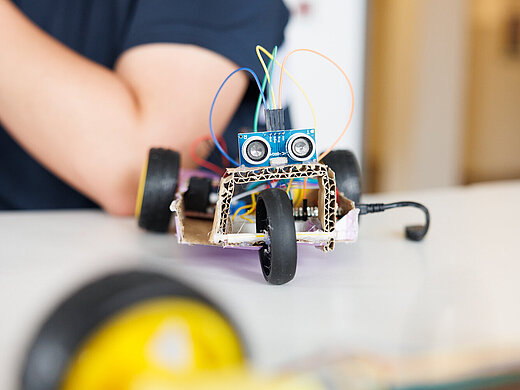
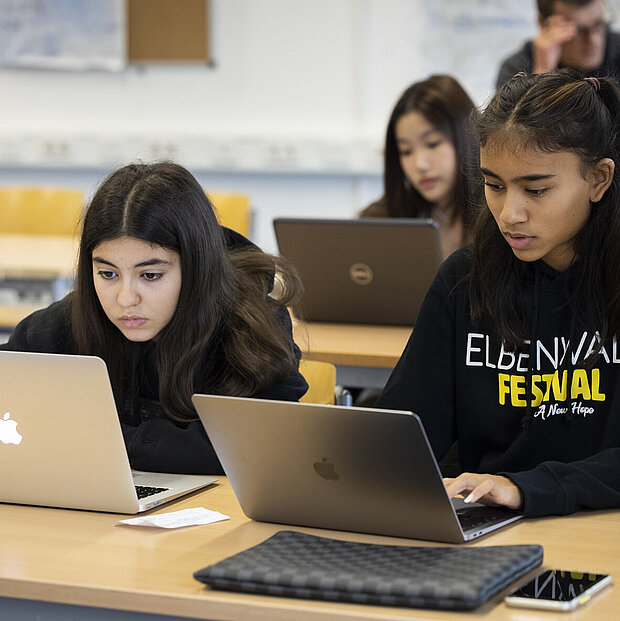
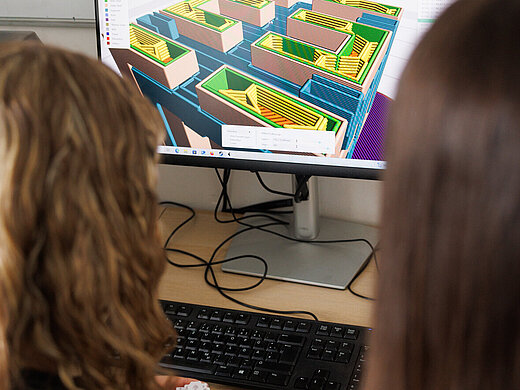
In addition to Science, our most students take Computer Science and ICT courses. From Grade 9 onwards, they can also choose the two-hour elective subject ICT. Digital exchange takes place regularly via Office 365, as all students have access to an MS Teams account from Grade 5onwards.
We offer a range of exciting opportunities for students to explore mathematics beyond the classroom. Our Maths Clubs (Mathe AGs) provide a space to discover mathematical ideas, tackle challenging problems and develop creative problem-solving skills. Students are also encouraged to take part in a variety of mathematics and computer science competitions, including the Mathematical Olympiad, the Bebras Informatics Competition (Biber), the Kangaroo Mathematics Competition (Känguru) and the Bolyai Team Competition.
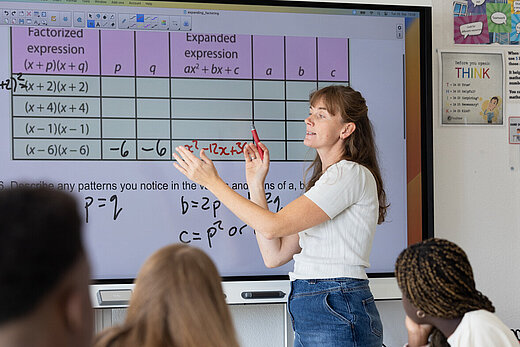
In the Mathematics Olympiad, our students tackle challenging, open-ended problems that require creativity, logical reasoning and perseverance. They work independently to develop sophisticated solution strategies, justify their thinking and present clear mathematical arguments. The competition provides an excellent opportunity for students who enjoy exploring mathematics beyond the classroom curriculum.
Each year, students from a wide range of year groups participate in the Kangaroo Competition, solving engaging multiple-choice problems that test their mathematical thinking in unusual and creative ways. Students learn to identify patterns, think strategically and approach problems from different perspectives, all while experiencing the fun and excitement of mathematics.

The Bolyai Team Competition places collaboration at the heart of mathematical problem-solving. Working in small teams, our students discuss ideas, compare approaches and jointly solve demanding mathematical challenges. The competition develops not only mathematical ability but also communication, teamwork and the confidence to defend and refine ideas together.
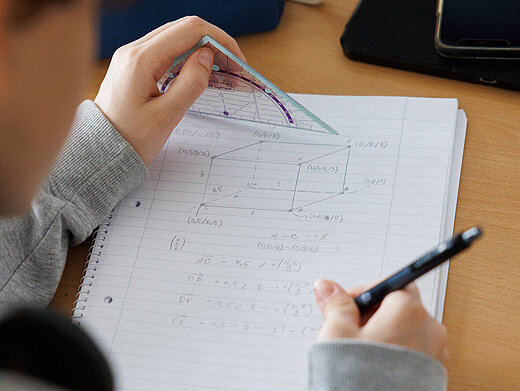
In the IT Beaver Competition, students solve a variety of computer science and computational thinking challenges. Without requiring advanced programming knowledge, the tasks encourage students to analyse problems, recognise patterns, develop algorithms and think logically. Through their participation, students gain valuable digital problem-solving skills that are increasingly important in today's technological world.
The Pangea Mathematics Competition offers students the opportunity to put their mathematical skills to the test in an exciting and challenging way. Through a variety of engaging problems, participants develop logical thinking, creativity and problem-solving skills. The competition encourages students to explore mathematics beyond the classroom, challenge themselves and discover the joy of mathematical thinking.